Showing posts with label Chinese-porcelain. Show all posts

Monday, June 2, 2014

Diamonds in the Rough at Estate Sales


Beginning today is a new blog section titled, “Diamonds in the Rough,” covering many of the places in the world (maybe not quite all but many) where one finds, buys & sells antiques. Just look at your local and major newspapers in the Classified Section to find the places that are hosting these events:

èAuctions  èAuction Sales  èIndividual Classified Sales èDownsizing Sales    èFlea Markets èEstate Sales èGarage Sales èMoving Sales èYard Sales

Today, I will post about finding antiques at an Estate Sale.

On a misty Friday morning, my daughter and I went to check out an Estate Sale at a home we knew of in town. The home was of a prominent family and the sale was being held in the house itself. The ad in the local paper read: 
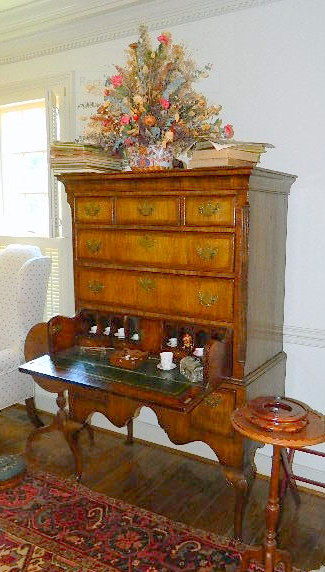
First-in-line-First-Thur-the-Door.” Historic Sale in a Historic area!

Items for sale were 18th & 19th Century Furniture & Antiques, China, Porcelain, Oriental Rugs, Antique Toys & Christmas ornaments, collectibles, postcards, and much more. As the ad read, we knew parking in the historic area was limited, but we knew where the house was and where to find parking. So off we went, umbrella in hand.

When we got there, about a dozen people were already in line, umbrellas soaked with rain. As we waited, we observed the deteriorating condition of the fairly recently constructed home. In fact, we saw it being built in 1996. So as for the home being historical, it was not, but the neighborhood was.

As we waiting, conversations among the crowd were casual and friendly. My daughter asked the lady standing next to her if she knew the family. “Absolutely,” the neighbor stated. “My family and theirs were friends for many, many years. The owner was a well-known building contractor. He built this house.” I could read my daughter’s mind as we both looked at the peeling paint on the windows, wondering if he was such a fine builder, why was his house in need of repair.” I soon found out the reason.

As she continued to talk about the family and taking much pride in her knowledge of them, I asked her if she knew the reason for the estate sale. Her face became somewhat melancholy when she said the couple were both deceased. With a quick recovery from the brief glum mood, I asked her if she knew why everything in the house was for sale.

Were there not family members that should have been given these antiques? Emphatically she replied, “Oh! There are three children and they had already taken what they wanted!” What was left I guess they didn’t want. And goodness me, the things they left behind made me question not only why, but what were the things they did keep? As we finally gained access into the house . . . two had to leave before two more would be let in, we were directed to go into the formal living room still filled with many pieces of fine furniture. Most of it still nice but worn. You could tell that the residents of the home were wealthy and had exquisite taste. Next room was the formal dining room, paneled from ceiling to floor, and must have been the site of many fancy
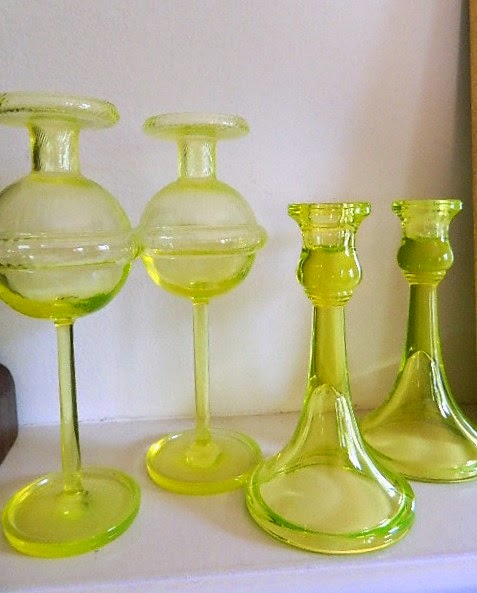
dinners. The table had stacks of beautiful china, glassware, and tablecloths. On a small table were a selection of old books. As my daughter is a bibliophile at heart, she was thrilled when she found a child's school book she had to have. I have plenty of dishes and glassware, so off we went into the kitchen. You could tell that it was a serious culinary center, counters and cabinets everywhere. Again, piles of dishes, rows of crystal glasses, many colorful vintage Depression glass, all there for the buying. 
Nothing here for us, so we stepped down on thru the long hall into the family room. Gracious me! There was an entire wall of shelves with more china and porcelain antiques,
knick-knacks, books, statuary, candlesticks, etc. On a large table, silver platters, teapots, and more dishes covered every inch. There was two massive chests, a large glass curio cabinet, two wooden armchairs and a very fine card able. With all that furniture, one would wonder if there was room for people. 
Again, nothing we wanted, so up the long staircase we went, then directed into a large bedroom. Here tables of toys reigned, evidence that there were children in this family and the builder husband/father created dollhouses, cradles and toy furniture. Boxes of Christmas items filled several tables. The children must of love reindeer because there had to be at least eight boxes of them alone. In the dressing room were more boxes
of Christmas tree glass ornaments, many vintage and very collectible. I even looked for one particular ornament I remember has a kid, but have yet to find it. 


The only thing I found that I wanted was a miniature replica of the famous statue of the Three Graces. My daughter bought it for me.

Back downstairs to pay for our finds. While my daughter waited in line, I looked around and felt the sad emptiness and silence that was soon to be in this house once filled with children, dinner parties and life. Sales like these make me sad. Even though the descendants got what they wanted, none of them wanted to keep the house. It was being sold after the sale. If one of them kept the house, that bookcase in the family room would have made a perfect Family Museum. It could have had some of those vintage toys, a few of those gorgeous dishes, photographs and antiques on display. But it was not meant to be. So back out into the misty weather and home to write about my time at an estate sale.

Next time you read about one of these sales, go to it. Do not be intimidated by the hoity-toity and snooty sounding moniker. The estate sale manager hired by the family is there to organize and sell. Many times the things that remain are transferred to another sale called an Estate Auction. This subject I will cover later. All of these sales is to make as much money for the seller as it is for the owner. But you never know when someone missed and you found a diamond in the rough.  Happy Hunting!

FYI: Visit online Estate Sales & Estate Auctions Directory   http://estatesales.org

Next Post: Yard & Garage Sales

Friday, May 16, 2014

China & Porcelain


How many times when you were a child did you hear, "Don't touch that!" or "Be extra careful when you dust that!" or this one, "Don't run through the house. Certain things could fall and you will be in a lot of trouble if they do!"

Vases on the hall table, plates hanging on the wall, statues on the piano, fancy candy dish on the coffee table. I grew up with these things as many of you have, too. Some were passed down to me, others I collected myself. Do you have pieces of fine china, porcelain and glass in your home? I like displaying these items, therefore, I do not have them in my family museum. And as I dust them for the millionth time (maybe not quite that many) I can still hear, “Be careful with that. It was your grandmother’s. And in this case, this vase actually was. My nana, Elisabetha, bought the Nippon vase in 1920. It proudly sat on the dining room table for years. When she passed away, my mother took possession of it. She, too, proudly displayed it in the living room. As a child I never sought to know anything about it except that it was old and pretty. Then one day, it almost met its demise, but survived the fall, big and small chunks strewed about the room. I can still remember watching my dad sitting at the kitchen table, painstakingly gluing the vase back together. Now I have it and the vase still reigns supreme, but this time it sits high on top the dining room china cabinet, bruised but still beautiful.


The important thing about collecting china and porcelain is to first, cherish the ones you have, not only when they are on display, but in a preservation mode; pictures and written documentation. Analysis the characteristics of the piece. The material of which it is made, how the image is put on the piece, and importantly, its mark on the bottom. Some pieces may not have one, but that does not mean it is of lesser value. But for serious collectors, those marks are extremely important. To assist you in determining those marks, please visit this website:
http://www.antique-marks.com  It is a fantastic guide to antique pottery marks, porcelain marks and china marks.


An example of a china mark is this one:  Nippon China. Nippon era began in 1891 when the Japanese porcelain was clearly marked "Nippon" due to the McKinley Tariff Act. This act required that all porcelain be marked with the country of origin.  ("Nippon" literally translates to "Japan".) This porcelain was made specifically to be exported to the west with designs and patterns that suited Americans tastes. At that time, Japan had a thriving porcelain industry using methods used in Europe and the United States.
 
The Japanese items were less expensive than pieces coming from Europe and became very popular in the U.S. The porcelain was sold in gift shops, dime stores, fairs and even at the local grocery. Nippon items were also sold by Montgomery Ward, Sears & Roebuck, mail order houses and other department stores.
In 1921 the United States government changed its position and required that Japanese imports no longer be marked “Nippon,” but with, “Japan.” This marks the end of the Nippon era. 
I started collection pieces of Nippon after a dear friend introduced me to the fine china. I was mesmerized. Every piece was exquisitely made and the artwork was beautiful. What captivated me more was that I could find this fabulous china at yard sales. I couldn’t believe that anyone would want to sell them and at pennies on the dollar. I guess that old adage, “One’s man’s junk is another’s treasurers.”
So, I started to collect Nippon, making sure each piece was made before 1921, and by time I finished buying my last piece, I amassed over a dozen pieces, each and every one precious. Again, there is so much I can write upon Nippon but I’d rather offer you an expert website that covers everything you want to know about Nippon. It is,
 International Nippon Collectors Clubhttp://nipponcollectorsclub.com

Do you ever question, "Is there a difference between things made in China and  made in Japan?”  Answer is Yes! Just about everything used to be made in Japan? TVs, VCRs, Microwaves, etc. However, in recent years many of these companies have shifted their production centers to China to save money. So even though the company itself is Japanese, many components or even whole units are made in China.
Just so that you know, Chinese porcelain originated in China, dating from the  Shang Dynasty (1600–1046 BC. Exported Chinese porcelains were held in such great esteem in Europe that in the English language china became a commonly used synonym for the Franco-Italian term porcelain. I would imagine that items of this caliber of china and porcelain are in grand museums. That is not to say that the china and porcelain items we own are inferior, their value is determined by individual tastes, hence worth.  

So what kind of china and porcelain do you collect? Other than the Nippon listed above, here are a few other types of collectibles that are in my home:

I have collected many Lladros over the years. Many were given as tokens of love and for special occasions. I love my Lladros and when Keith and I were fortunate to travel to Madrid, Spain, I went into several Lladro Galleries and was flabbergasted at the variety and size of statues available for sale. These artistic creations take your breath away. There is so much to tell about Lladro that it would take up this whole blog. Therefore, please take some time a visit their website and see for yourself how beautiful is this art form.            http://www.lladro.com/home.jhtml


Two of my favorite figurines are of this Colonial Man & Woman, coyly flirting with each other. On the man's base is the signature of Carlo Mollica.  It took me a while to research the name, but when I found it, the information said the figurines were made by one of the oldest and most collectible of ceramics factories in Italy.

The male figurine bears the symbol of Carlo Mollica (C. Mollica). The Mollica factory began in 1880 in Naples. It moved to Milan in 1942. Between 1950 and 1970 the factory reached its zenith of popularity under the leadership of Carlo Mollica. During this period Mollica produced artwork equal to the finest made throughout Italy. The factory produced a wide range of products from classical Capodimonte to Lenci-like Art Nouveau. Mollica ceased operation in 1978. Walter Del Pellegrino, author of Italian Pottery Marks from Cantagalli to Fornasetti, 1850-1950.   

Many years ago, Keith and I gave this statue of a Blue Jay to his parents for an anniversary. It sat on top of their TV set for years. Before his mother passed away, she gave it back to us. It now shares the top of an antique dresser with the Canaries.  Both of these bisque figurines were made by Andrea by Sadek, also known as Charles Sadek Import Company or J. Willfred,  headquartered in New Rochelle, New York. The company was founded in 1936 by Charles and Norman Sadek and is still owned and operated by the Sadek family.
 Another Andrea by Sadek is a white Bisque Compote Dish with three cherubs and two candlesticks each with a cherub. Circa 1965? This piece gives me the heebie-jeebies every  time I pick it up to move it. So it has been sitting on the small silverware chest for years. But in order to get to the silverware in the top drawer, I have to pick up the compote. Oh dear me!
 
There are many more wonderful pieces of china and porcelain that adorn our home, but there is no way I could include them all in the blog. However, last but not least, is this pair of Civil War Soldiers. As our residence is within walking distance of the site of the Battle of Williamsburg’s, “Emory’s Failed Advance; 1862 Peninsula Campaign,” it seemed compelling to display these statues.  Years ago, Keith was given this pair to use as examples made by Woodmere China, when he use to rep for them.

Woodmere created porcelain dinnerware with American history designs, many of which are museum-quality pieces. Its products have served as distinctive gifts for presidents, heads of state and dignitaries. After more than three decades, the business at 2618 W. State St.  stopped production, attributing the closing to a shrinking customer base because of the economy. Steelite International acquired the Woodmere China on   October 19, 2013.
In conclusion, remember that China is delicate, fragile and easily broken.  Where ever you display your fine pieces, to make sure they stay steady in its place, unmovable from all kinds of actions that cause it injury or possible demise, consider using what I had recommended in the March 24 post:
“Museum Gel” to secure your pieces. Use it on shelves, walls, tables, etc., anywhere and everywhere the item may be vulnerable. 
Most of all, enjoy your collections. They say a lot about you and your home. Always surround you and your family with as much beauty as you can.
Next Post:   Going to the Prom